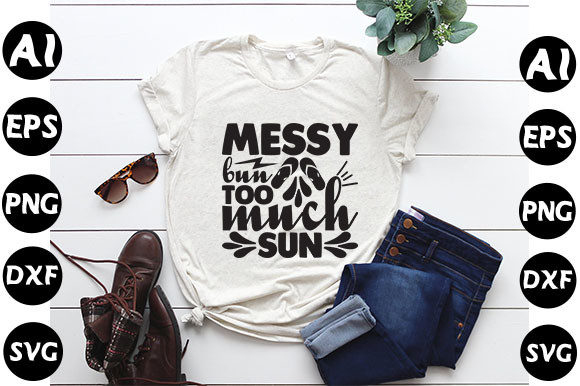
Review: Summer Quote Design, Messy Bun Too Much
As a designer who spends more time staring at stitch simulations than I do sleeping, I have learned to be skeptical of trendy graphics. We see thousands of files flood the market every season, promising easy sales and quick projects. But when I opened the folder for Summer Quote Design, Messy Bun Too Much, I paused. It wasn’t just another generic phrase; it had a specific attitude that resonates with a huge demographic of my clients. The combination of the relaxed "messy bun" aesthetic with the humorous acknowledgment of sun exposure creates an immediate connection. It is casual, relatable, and perfectly timed for the warmer months.
I decided to put this design through its paces, not just as a digital asset, but as a potential centerpiece for real-world embroidery projects. My goal was to determine if this graphic holds up under the needle, how it translates from screen to fabric, and whether it offers genuine value for small shop owners and hobbyists alike.
First Impressions: Mood and Visual Personality
The first thing that strikes you about this design is its laid-back vibe. It does not try to be overly ornate or formal. Instead, it leans into the modern, hand-lettered style that has dominated the handmade market for years. The layout feels balanced, with the text and graphical elements working together rather than competing for attention. For an embroidery designer, this is crucial. A cluttered design often leads to stitching nightmares, where thread breaks and registration issues ruin the final look. This design, however, appears to have enough breathing room between elements, suggesting it will stitch out cleanly on most home machines.
The theme is unmistakably summer. It captures that specific feeling of wanting to enjoy the outdoors while acknowledging the heat. This emotional resonance is what sells products. When a customer sees this on a tote bag or a sweatshirt, they are not just buying a shirt; they are buying into a lifestyle identity. As a reviewer, I look for designs that tell a story instantly, and this one succeeds in doing so with minimal visual noise.
Real-World Application: From Digital File to Finished Product
To test the versatility of this machine embroidery design, I imagined several common scenarios where it would be used. The most obvious application is custom apparel. Picture this design stitched onto the chest of a lightweight, heather-grey sweatshirt. The contrast between the soft fabric texture and the crisp lines of the embroidery would create a high-end boutique feel. It works equally well on a canvas tote bag, where the durability of the thread adds value to a simple accessory.
I also considered its use in baby embroidery. While the phrase might seem more adult-oriented, the playful font could easily be adapted for a toddler’s summer outfit, perhaps paired with a sun motif. However, for adult custom apparel, such as a linen apron for a gardener or a beach cover-up, the design shines. It fits the narrative of leisure and self-care that many buyers seek in personalized gifts.
For Etsy sellers and craft business owners, this design offers flexibility. It is not limited to clothing. Imagine it as an embroidered patch on a denim jacket or a baseball cap. The compact nature of the quote allows it to fit comfortably on curved surfaces, provided the digitizing accounts for the pull of the fabric. In my experience, designs with clear, bold lines perform better on caps than those with intricate, tiny details, and this design seems to favor clarity over complexity.
Technical Considerations for Embroidery Success
While the visual appeal is strong, the technical execution is where many designers stumble. Since the product description notes that the ZIP file contains EPS, SVG, PNG, and DXF files, it is important to clarify what this means for embroiderers. These are primarily vector and image formats used for cutting machines, vinyl decals, and scrapbooking. They are not native machine embroidery files like PES or DST. This is a critical distinction.
If you are an embroidery designer, you will need to digitize this graphic yourself or ensure you have access to a properly digitized version if one is included separately. If you are digitizing it from the SVG or EPS, pay close attention to stitch density. The "messy bun" element likely requires a fill stitch to capture the texture of hair, while the text may benefit from a satin stitch for sharpness. Be cautious with the transition between these two areas. A sudden change in density can cause puckering, especially on thinner fabrics.
When working with this design, always test on scrap fabric first. I recommend testing on both a stable cotton and a stretchy jersey knit to see how the stabilizer interacts with the stitch pattern. For dark fabrics, consider using a lighter thread color to ensure readability, or add a white underlay to make the colors pop. Conversely, on light fabrics, ensure your thread colors have enough contrast to remain legible from a distance.
Navigating Challenges: Fabric and Hoop Constraints
Not every project is a perfect match for this design. Small hoop sizes can be restrictive if the design is large. Always check the dimensions before starting. If you are working on a curved surface like a hat, you must account for distortion. The text should be centered carefully to avoid looking skewed after stitching. Additionally, textured fabrics like terry cloth towels can swallow up fine details. If you plan to use this on a kitchen towel or blanket, consider increasing the stitch width slightly or choosing a bolder thread weight to maintain visibility.
Avoid using this design on very thin, sheer fabrics without a heavy cut-away stabilizer. The tension from the embroidery could distort the garment, ruining the drape. For layered garments, such as a hoodie with a thick front pocket, ensure your machine has enough clearance and that your needle is sharp enough to penetrate the layers without causing jumps or skipped stitches.
Enhancing Brand Value and Customer Trust
Using a well-chosen design like Summer Quote Design, Messy Bun Too Much can significantly enhance the perceived value of your handmade product. Customers associate clean, professional embroidery with quality. When the stitching is crisp and the design is relevant, it builds trust. It shows that you understand current trends and care about the finished product.
For small shop owners, consistency is key. If this design fits your brand’s aesthetic—casual, fun, and summer-ready—it can become a staple in your seasonal collection. Use it in printable mockups to gauge interest before committing to large production runs. High-quality photos of the embroidered item on a model or in a lifestyle setting can drive engagement and sales. Remember, the design is just the start; the presentation is what sells the dream.
Final Verdict and Practical Advice
In conclusion, this design is a strong contender for your summer lineup. It is versatile, emotionally resonant, and visually appealing. However, success depends on proper preparation. Verify the file formats you receive and ensure you have the right tools to convert or use them for embroidery. Check licensing terms carefully, especially if you plan to sell finished items commercially. Most designers allow commercial use for physical products but restrict the resale of the digital file itself.
Take the time to refine your digitizing settings, choose high-quality threads, and select appropriate stabilizers. Test, adjust, and then stitch with confidence. Whether you are creating a personalized gift for a friend or stocking your Etsy shop with fresh inventory, this design has the potential to become a bestseller. It captures the essence of summer in a way that is both stylish and approachable, making it a valuable addition to any creative entrepreneur’s toolkit.