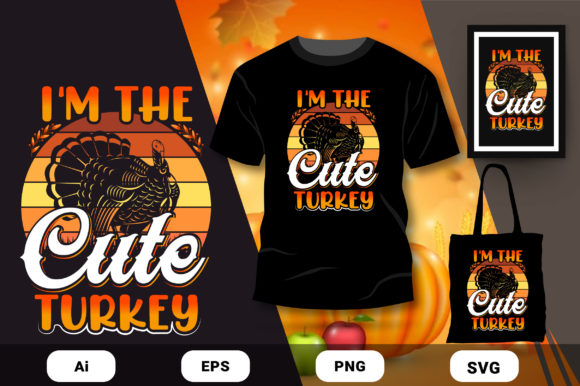
Reviewing the Cute Turkey T-Shirt Design for Embroidery
As an embroidery designer who spends more time staring at stitch previews than actual fabric, I have learned to be skeptical of digital assets. We see thousands of Graphics and Print Templates flood the market every season, but very few translate well from a flat screen to a textured, three-dimensional finished product. When I first opened the Cute Turkey T-shirt Design Graphic, my initial reaction was cautious optimism. The typography is bold, and the turkey motif is simplified enough to suggest it might survive the transition from vector to thread without turning into a tangled mess.
In this review, I am evaluating this design not just as a digital file, but as a potential component of a real-world embroidery project. Whether you are an Etsy seller preparing for the holiday rush or a hobbyist making a personalized gift for a family dinner, understanding how this design behaves under the needle is crucial.
First Impressions: Mood and Visual Personality
The Cute Turkey T-shirt Design Graphic leans heavily into a playful, whimsical aesthetic. It is not trying to be realistic; instead, it embraces a cartoonish charm that works exceptionally well for casual wear and home decor. The layout balances text and image in a way that feels intentional rather than cluttered. For embroidery, this balance is vital. If the elements are too close together, the stitches will merge, losing definition. Here, the spacing appears generous, which gives me confidence that the design will breathe once stitched out.
The mood is undeniably festive without being overly aggressive. It fits perfectly into the category of holiday embroidery that appeals to children and adults alike. This versatility makes it a strong candidate for a small shop product line, where you need designs that appeal to a broad demographic. The visual personality suggests warmth and humor, two emotions that drive sales in the craft business sector.
Real-World Application: From Screen to Stitch
To test the viability of this design, I imagined applying it to several common substrates. Let’s consider a sweatshirt embroidery project. Sweatshirts have a thick, fuzzy texture that can swallow small details. Because the Cute Turkey T-shirt Design Graphic uses bold lines and substantial shapes, it should hold up well against the fleece. The key here is using a cut-away stabilizer to prevent the heavy fabric from distorting the hoop during stitching.
Another excellent application would be a tote bag design. Canvas bags are popular for grocery runs and beach trips, and a durable embroidered turkey adds a touch of seasonal flair. Since canvas is a tight weave, the stitches will sit on top nicely, creating a tactile relief that customers love. However, if you are planning to use this on a baby embroidery item, such as a onesie, you must be careful. Baby skin is sensitive, so you would need to ensure the back of the stitching is covered with a soft backing or that the design is small enough to avoid irritation.
For those interested in custom apparel, this design could also work on a denim jacket. Denim provides a sturdy base for heavier threads. Imagine using metallic gold or copper thread colors for the turkey’s feathers to add a premium feel. This kind of detail elevates a simple handmade product into a boutique-quality item.
Technical Considerations and Potential Pitfalls
While the design looks promising, there are areas where caution is required. The file formats listed include Transparent PNG, JPG, EPS, SVG, and AI. It is important to note that these are primarily graphic design formats, not native machine embroidery files. Unless you have specialized software to convert these vectors into stitch data, you will need to digitize the design yourself or hire a digitizer. This is a critical distinction for beginners who might assume they can load an SVG directly into their embroidery machine.
If you are digitizing this yourself, pay close attention to stitch density. The turkey’s body and the typography likely require different approaches. The text might benefit from a satin stitch to keep edges crisp, while the turkey’s body might need a fill stitch to cover the area smoothly. Avoid making the fill too dense, as this can cause puckering, especially on lighter fabrics like cotton t-shirts.
Small details are another concern. If the turkey has tiny eyes or beak details, these may get lost if the hoop size is too large relative to the design. Always test the design on scrap fabric first. Check how the fabric texture interacts with the thread. On stretchy fabrics, such as jersey knits, you must use a stabilizer that prevents stretching during the stitching process, or the turkey will look distorted once the hoop is removed.
Enhancing Product Value and Customer Trust
Using a well-executed design like the Cute Turkey T-shirt Design Graphic can significantly boost the perceived value of your products. Customers associate clean, professional embroidery with quality. When they see consistent stitch work and clear details, their trust in your brand increases. This is particularly important for commercial embroidery projects where repeat business relies on satisfaction.
For digital product sellers, this graphic can be used to create high-quality printable mockup images. Even if you are selling the physical embroidered item, having realistic photos helps buyers visualize the final result. Ensure that your mockups show the texture of the thread, not just a flat print. This transparency builds honesty and reduces return rates.
Furthermore, this design supports brand consistency. If your shop focuses on whimsical, family-friendly items, this turkey fits seamlessly into your existing catalog. It reinforces your brand identity as a source for cheerful, seasonal goods.
Practical Notes for the Embroidery Designer
Before you commit to producing a batch of items, follow these practical steps:
- Test on Scrap Fabric: Always run a test stitch-out on the same type of fabric you plan to use for the final product. This reveals issues with tension and density.
- Check Thread Contrast: Choose thread colors that stand out against the fabric. A dark turkey on a black shirt will be invisible. Use a color chart to plan your palette.
- Review Stitch Density: If digitizing, ensure the density is appropriate for the fabric weight. Heavy density on thin fabric causes puckering.
- Confirm Hoop Size: Make sure the design fits within your machine’s hoop capabilities without needing excessive re-hooping.
- Inspect Small Details: Zoom in on the vector file to see if any lines are too thin to stitch effectively. Simplify if necessary.
- Test in Black and White: Convert the design to grayscale to check for contrast and clarity without the distraction of color.
- Use Proper Stabilizer: Match the stabilizer to the fabric. Cut-away for knits, tear-away for wovens.
- Verify Licensing: Since this is a graphic file, confirm whether the license allows for commercial use of the resulting embroidered items. Do not assume; read the terms.
In conclusion, the Cute Turkey T-shirt Design Graphic is a strong contender for seasonal projects. Its bold, simple lines make it suitable for various applications, from embroidered patches to aprons. However, success depends on proper digitization and material selection. By treating this graphic as a starting point for careful craftsmanship, you can create products that delight customers and stand the test of time.